
No Fayette Weekly Arrest Blotter
None of the main official sites carries a weekly Fayette County arrest blotter. The sheriff posts none. Neither do Oak Hill Police, Fayetteville Police, Ansted Police, or WVDCR. What WVDCR does publish is a set of dated jail admissions. A current custody search is part of that set. That is facility data, not a narrative police log of every arrest. No 72-hour feed exists, and inventing one only misleads. A sound multi-day review instead joins several official layers.
Most people committed after a Fayette arrest or court order go to Southern Regional Jail. The state runs it for seven counties. That regional role means an admission is not a city blotter entry. An arrest with no jail commitment may be missing entirely. An admission may also reflect a court order or transfer. It may not be a same-day street arrest.
No weekend schedule or archive depth is published. Run each date yourself, then verify the event with the arresting agency or the court.
Build a Fayette Arrest Log
Start with WVDCR Daily Incarcerations. Pick Fayette County. Then run the date controls for each day you care about. Note the institution and identity fields on every row. For anyone who may still be held, follow up in the current jail search. Released or vanished rows matter too, so the court index and the agency record take on more weight.
- Choose the first date in the period and save the relevant admission details.
- Repeat the search for each later date instead of assuming a rolling weekly window.
- Compare names, birth dates, institutions, and admission times to avoid false matches.
- Check WVDCR Offender Search (Jails) for current regional custody.
- Search MCRSearch for a filed Fayette magistrate case.
- Ask the arresting agency or records custodian for the incident or commitment record.
Each layer answers a different question. The jail layer shows whether someone was admitted or remains in custody. Police records identify the agency event. The court layer carries the filings. Kept separate, these sources stay trustworthy. For a same-day view instead, the Fayette County Daily Arrest Report explains the admission fields and fresh-booking lag without repeating this multi-date workflow.
What Fayette Arrest Entries Show
Every field in an arrest entry carries its own meaning. Keep the layers straight. The official daily result gives admission context. Police reports and court files fill in details later. Blurring them together turns early data into something it is not.
| Record item | Use and limit |
|---|---|
| Admission date and time | Shows institutional intake, which can follow the actual arrest. |
| Full name | Must be checked with a birth date or other identity field. |
| Institution | Identifies the WVDCR site tied to intake, often Southern Regional Jail. |
| Booking charge | States an charge received at booking. |
| Arresting agency | May appear in the agency report rather than the state admissions table. |
| Custody status | Can change quickly after bond, release, or transfer. |
| Photo | WVDCR creates adult booking photos internally, but public display is not assured. |
| Disposition | Comes from the court, not from the arrest or admission row. |
WVDCR posts its own warning. Public information changes fast. A listed location, release, or status may not be current. Its sentencing data is not the underlying criminal action either. Those cautions point to one habit: check Fayette court records before drawing any conclusion.
Weekend Fayette Arrest Reporting
No source publishes a Fayette weekend or holiday posting timetable. Search on Monday and you may see events from several dates. That is a timing quirk, not a documented surge. The sound method runs Friday, Saturday, Sunday, and Monday separately. A Sunday booking processed late may still need a second look.
The web alone will not settle timing. Southern Regional Jail answers custody questions at 304-256-6726. The Fayette County Sheriff's Department public office line is 304-574-4216. Ask which office actually holds the record. Do not assume the sheriff runs the regional jail. City police departments keep their own agency records, and WVDCR holds the correctional booking file.
Note: A delayed online row reflects a changing database. It marks custody status, not the moment an arrest actually occurred.
Fayette News Is Story Based
The official county news page names two hometown papers. They are the Fayette-Tribune and the Register-Herald. MetroNews, WVVA, WVNS, WJLS, WV News, and Lootpress also run selected Fayette crime and arrest stories. A story can explain an agency statement, a criminal complaint, a pursuit, or a warrant operation. None of these outlets functions as a complete booking log. The WJLS Local News page shows the regional story format. It is used for arrests and public-safety events.
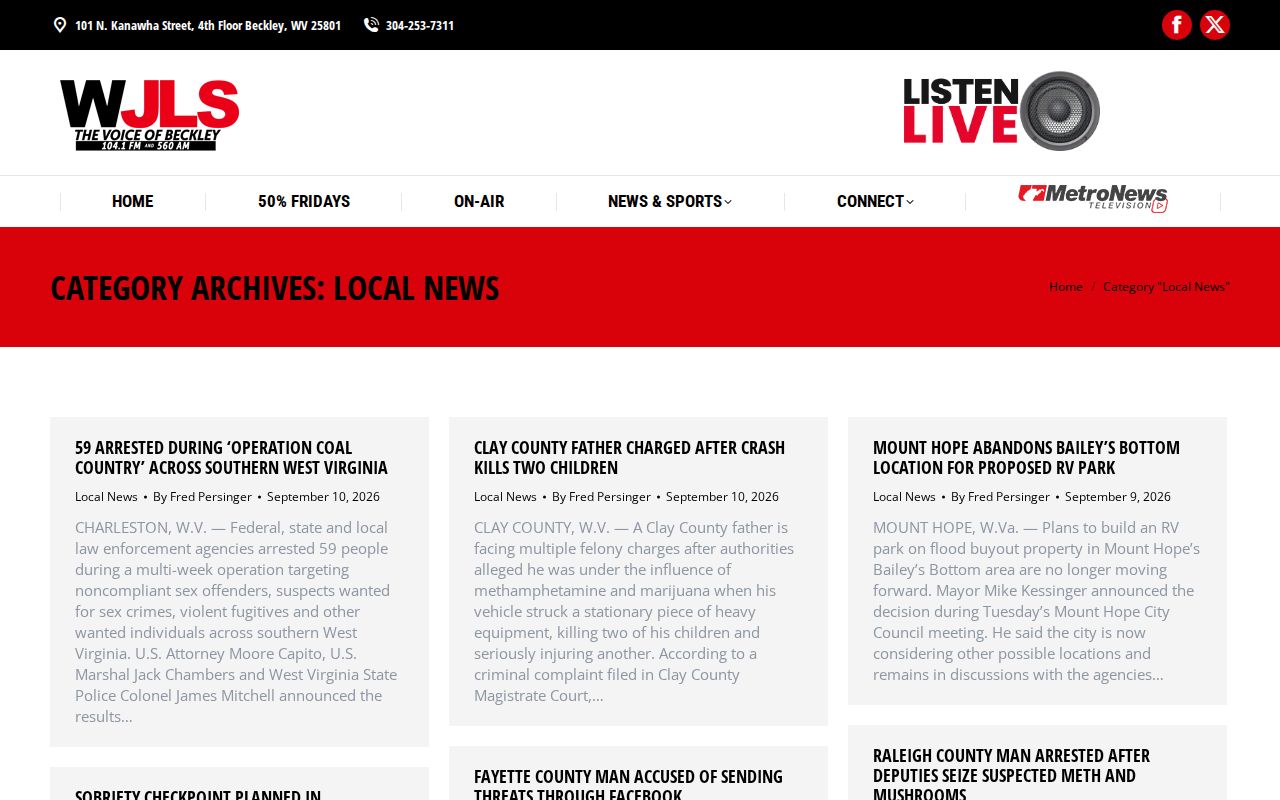
This is a news stream, not a county roster. Every item still needs official custody and court verification. Some outlets publish an agency photo. Others run no photo at all. A headline can stay searchable long after a release or dismissal, so follow the linked case to the clerk's record.
Unofficial Fayette Arrest Archives
Busted Newspaper, Recently Booked, and Arrests.org have all carried Fayette County entries. Unofficial is the key word. Their date windows, page counts, source labels, corrections, and roll-off rules do not match WVDCR. Recently Booked offers a 30-day view. Others expose deeper pagination or search filters. None proves completeness. The Recently Booked Fayette page shows one commercial county index that must follow official sources.
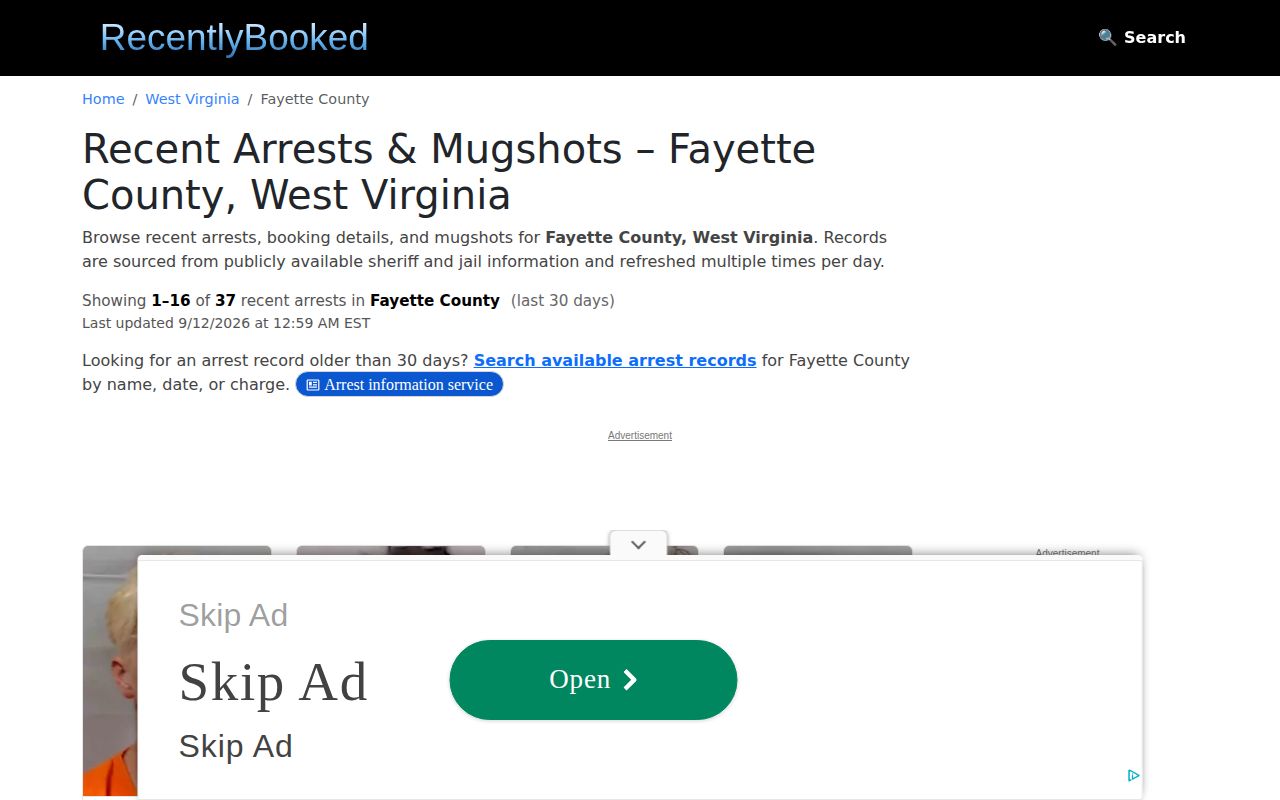
These pages are unofficial archives, not booking lists. Nothing here replaces WVDCR or the courts. Check any entry against name, birth date, admission date, facility, and court case number. Photos can linger after custody ends. Similar names cause mix-ups too. A missing official row may mean release, a spelling issue, sealed material, a juvenile privacy rule, or an event that never reached regional-jail intake.
Older Fayette Arrest Records
Web visibility and legal retention are two different things. The West Virginia sheriff schedule sets firm periods. Commitment records stay on file for five years. Prisoner reports last ten years or until audit. Complaint calls, radio logs, and unserved warrants carry varying periods. A booking photo need not stay online that long. WVDCR may also file a regional-jail item under a different state record series. For an older Fayette County arrest, start with the agency that made it. Then try the Fayette magistrate, circuit clerk, or the relevant WVDCR custodian. A focused West Virginia FOIA request needs those details. Name the person, date, agency, facility, and exact record. Copy fees are capped at actual reproduction cost. Search or retrieval time cannot be charged under the cited statute. The five-day rule is a response deadline, not a delivery promise. The state sheriff retention schedule explains which county record series survive, and for how long. The West Virginia State Archives publishes Fayette County microfilm finding aids for older court material. It offers no digitized booking-photo collection. Ask which record series governs an item before assuming it was transferred or destroyed.
Read Fayette Charges With Care
A booking entry marks an arrest. What follows can vary widely. Bond, release, transfer, dismissal, plea, or conviction may come next. The free magistrate search returns up to 30 records. It skips the underlying court documents. The Fayette clerk supplies copies and the authoritative case path. News stories, unofficial archives, and jail rosters all stay incomplete, so the court file is where the story ends.